





News Archive News 2025Quantum Security Moves Closer: CESNET Validates a New Generation of Data Encryption
Quantum Security Moves Closer: CESNET Validates a New Generation of Data Encryption
 10. December 2025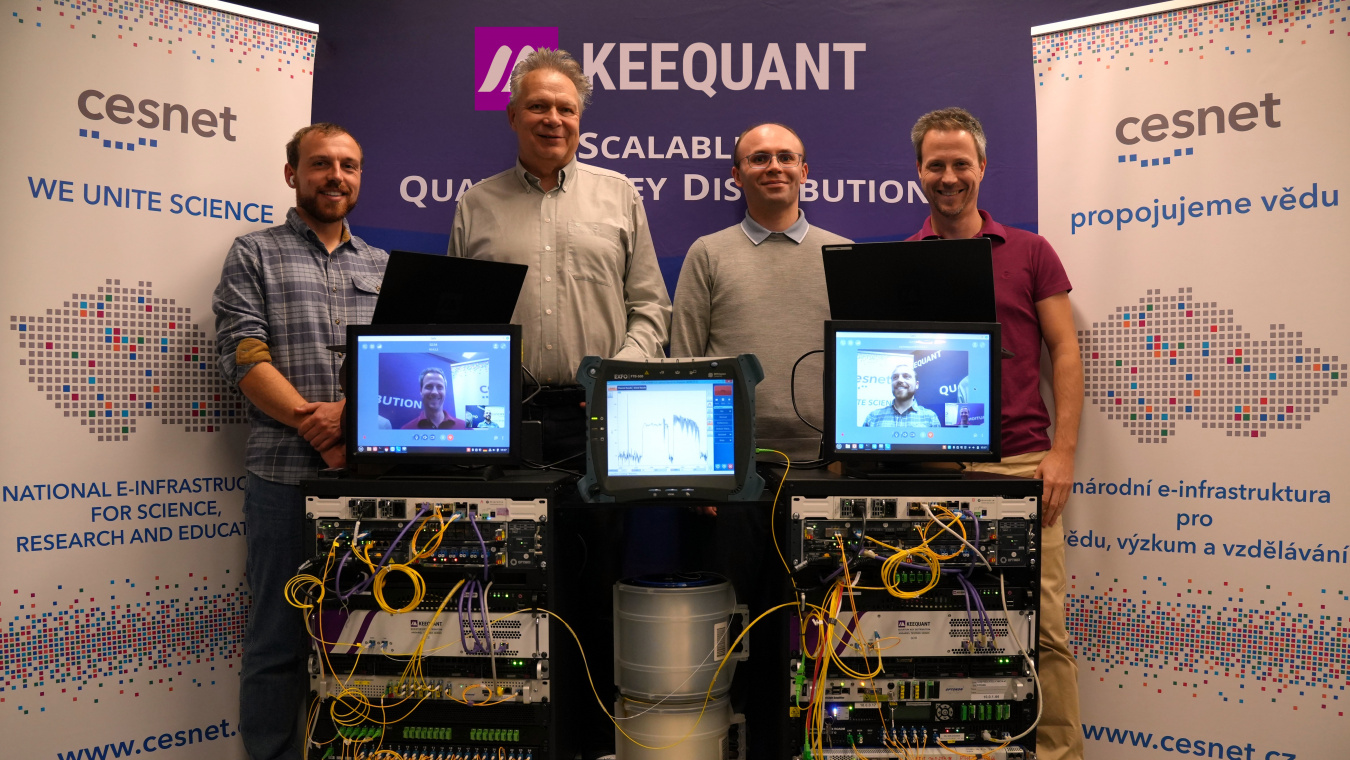
Secure communication between computers is fundamental to today's digital world. With quantum computers soon capable of breaking current encryption methods, it is essential to find new ways to protect data. One such method is quantum key distribution (QKD), a technology that uses the principles of quantum physics to reliably exchange encryption keys.
Tests at the CESNET optical network laboratory have confirmed that QKD can be integrated into conventional high-speed optical networks without the need for a separate fibre. This is a significant development in ensuring secure communication in the era of quantum technology.
The testing was conducted as part of the international SEQRET (Secure and Industrialised Quantum Key Distribution for European Telecom Networks) project. CESNET's focus was on verifying the CV-QKD (Continuous Variable Quantum Key Distribution) system developed by the German company KEEQuant. The aim was to verify whether this technology could be used alongside conventional data transmission in optical networks employing DWDM, a technology that enables multiple data channels to be transmitted simultaneously over a single fibre.
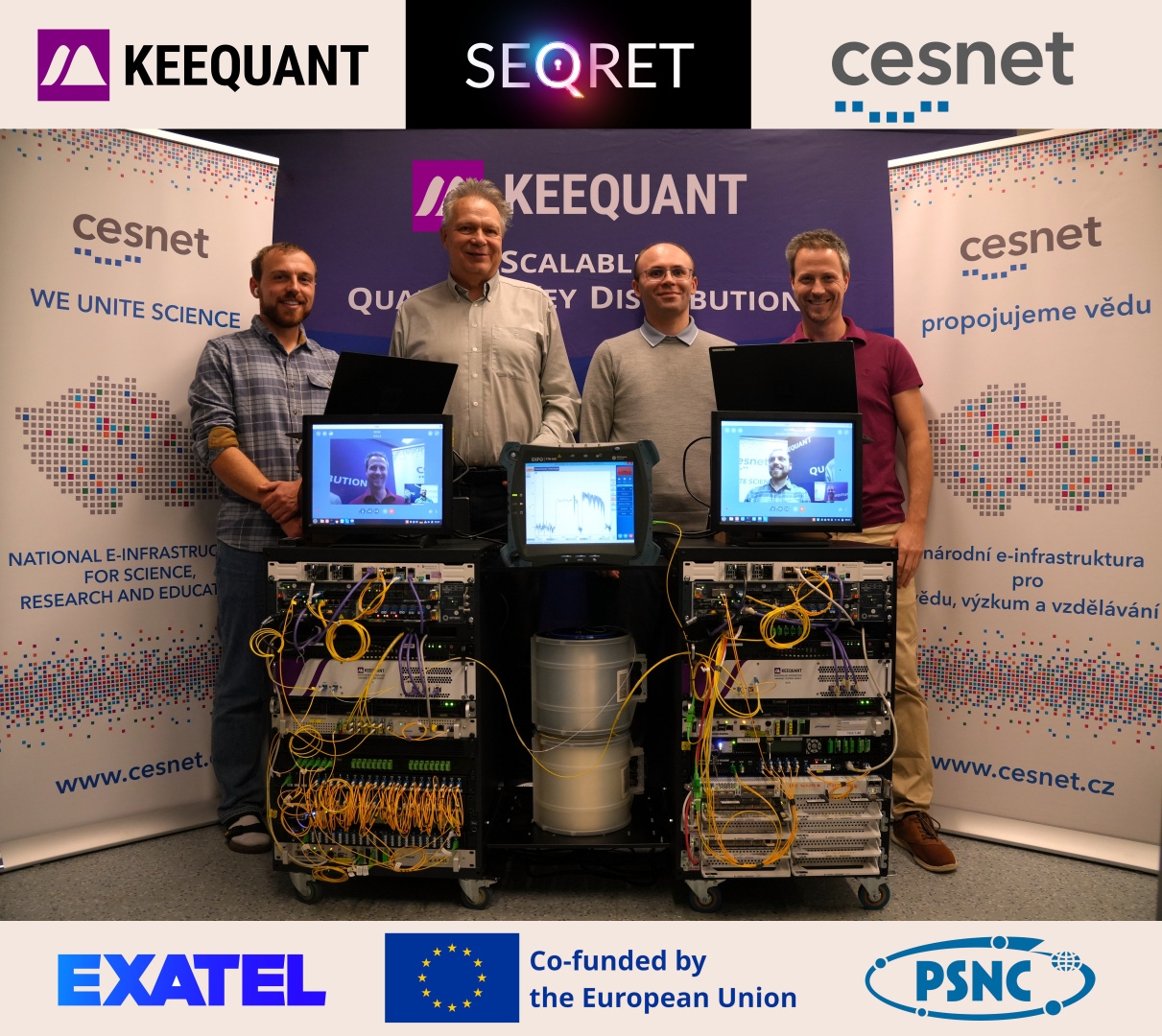
The american company Ribbon also took part in the tests, providing an encryption card with a transfer speed of 400 Gbit/s. This card was connected to the CV-QKD system and integrated with a Key Management System (also provided by KEEQuant) to manage quantum-generated keys. The functionality of the entire solution was confirmed by a live encrypted video transmission, demonstrating the stability and reliable operation of all system components.
Quantum-secure encryption, which includes QKD technology, uses quantum physics principles to securely exchange encryption keys and protect data transmission. This makes it possible to detect any attempt to eavesdrop on or interfere with data transmission. In the future, it will ensure the secure transmission of sensitive information.
The international SEQRET project, funded by Digital Europe Programme, brings together partners from several European countries who are collaborating to develop a new generation of quantum-resistant communication infrastructure.
Photo gallery